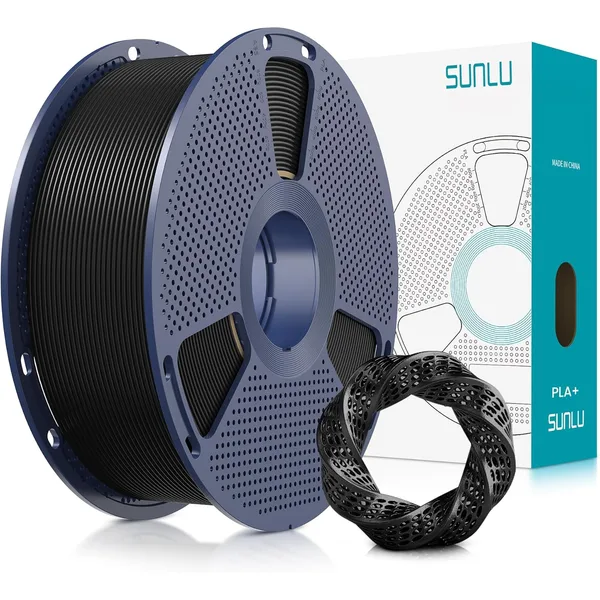
3D printer filament absorbs water from the air. That’s the entire reason this article exists. PLA, PETG, ABS, TPU, and especially Nylon are all hygroscopic — meaning they pull moisture out of humid air and bind it into the plastic itself. Wet filament prints rough, brittle, stringy, and full of micro-bubbles that look like burst-open zits on the surface of your part.
The good news: storage is a solved problem. The bad news: the cheapest “store it in a cardboard box” approach doesn’t work, and the expensive “buy a $300 dehumidified vault” approach is overkill for 95% of hobbyists. Here’s what actually works at every budget.
TL;DR — pick your storage tier
| Tier | Method | Cost | Best for |
|---|---|---|---|
| Free | Resealable freezer bag + silica gel packets | $0–$5 | Spools you’ll use within 2 weeks |
| $25 | Plastic tote + bulk silica gel + hygrometer | $20–$30 | Hobbyists with 5–15 spools |
| $60 | Filament dryer box (Sunlu, Comgrow, eSUN) | $50–$70 | Active printers, PETG/Nylon users |
| $150+ | Multi-spool dry box with active dehumidification | $120–$200 | Print farms, daily users |
Pick the cheapest tier that matches your usage and stop. Anything beyond that is diminishing returns.
Why filament goes bad in the first place
Filament manufacturers ship spools vacuum-sealed with a silica gel packet inside. When you tear open the bag, you start a clock — the spool begins absorbing humidity from the air immediately, and depending on where you live, that clock runs fast.
Average humidity by region:
- Arizona, Nevada, New Mexico (desert states): 25–35% relative humidity. You can leave a spool out for weeks with minor consequences.
- Most of the US Midwest, Northeast, Northwest: 45–60%. Spools start showing problems after 1–2 weeks of open storage.
- Florida, Gulf Coast, Pacific Northwest (Seattle), tropical climates: 70–90%. Spools can become unprintable within days.
Different materials absorb water at different rates:
- PLA: slow absorber. Tolerates 1–2 weeks of open storage in most climates before quality drops noticeably. The most forgiving filament.
- PETG: medium. 1 week is the safe threshold; 2 weeks starts producing visible stringing and surface defects.
- ABS / ASA: medium-slow. Similar to PETG but the symptoms are different — wet ABS warps and lifts more aggressively.
- TPU: fast. Within 3–5 days of open storage, TPU becomes nearly unprintable. Stringing, oozing, and rough surface are the giveaways.
- Nylon (PA, PA-CF): extremely fast. Nylon absorbs water in hours, not days. You should dry it immediately before every print, no exceptions.
How to tell your filament is wet
A few telltale signs, in increasing severity:
- Faint popping or hissing sound during printing. This is water inside the filament boiling at the hotend temperature and escaping as steam. If you can hear it, your filament is meaningfully wet.
- Stringing between distant parts of the print. Some stringing is normal on PETG and TPU. Excessive stringing on PLA is almost always wet filament.
- Bubbly or “popping” surface texture. Look at the side walls of a recent print under good light. If you see tiny round bumps or pock marks scattered across the surface, that’s water vapor escaping during extrusion.
- Brittleness when you bend the filament. Take a 6-inch piece off the spool and try to bend it. Dry filament flexes and only breaks at sharp angles. Wet filament snaps cleanly with almost no flex — it’s lost its plasticity.
- Layer adhesion failures. Wet filament prints layers that don’t bond properly. Parts come off the bed and crumble when you twist them.
The four storage methods that actually work
Method 1: Freezer bag + silica gel ($0–$5)
The cheapest legitimate solution. Take a 1-gallon Ziploc freezer bag, drop the spool inside with one or two silica gel packets (the ones from shoeboxes, electronics packaging, or vitamin bottles), squeeze the air out, and seal.
Why it works: A sealed bag stops new air from reaching the spool, and the silica gel absorbs whatever moisture is already inside. As long as you reseal after every print session, this keeps PLA and PETG dry for weeks.
Why it might not work: You need enough silica gel — one tiny packet from a shoebox isn’t enough for a 1kg spool. Use 2–3 packets per spool, or buy bulk silica gel beads on Amazon (~$15 for a giant bag that lasts forever).
Best for: Hobbyists with 1–3 spools, low-humidity climates, anyone who wants to start dry-storing today with stuff they already have.
Method 2: Plastic tote + bulk silica gel ($20–$30)
Step up from freezer bags. Buy a clear plastic tote with a snap-close lid (Iris Weathertight, Sterilite Stack & Carry, or any airtight bin works), drop a few open containers of bulk silica gel beads inside, add a $5 hygrometer to monitor humidity, and store all your spools together.
Setup:
- 1 tote: ~$15 (Walmart, Amazon)
- 1 lb of indicating silica gel beads: ~$10 (turns from orange to dark green when saturated, microwave to regenerate)
- 1 mini hygrometer: ~$5
Target humidity inside the tote: under 25%. If your hygrometer reads above 30%, your silica gel needs replacement or regeneration.
Why it works: Larger air volume means more moisture to absorb, but the bulk silica gel handles it easily. You can store 10+ spools at once and only need to swap silica gel every 2–4 weeks depending on how often you open the tote.
Best for: Hobbyists with 5–15 spools, medium-humidity climates, anyone who wants the “just dump it in here” workflow.
Method 3: Filament dryer box ($50–$70)
A filament dryer is a small heated box that holds 1–2 spools and actively drives moisture out. The Sunlu S2, Comgrow Dry Box, and eSUN eBox Lite are the popular models in the $50–$70 range. Better units (Polymaker PolyDryer, Sovol SH02) run $90–$150.
How it works: A small heater raises the box temperature to 50–70°C (depending on filament type) and a fan circulates dry air through the spool for 4–8 hours. After drying, you can leave the spool inside the box and print directly from it through a PTFE tube. This is the killer feature — your filament stays dry while it’s being used.
What makes filament dryers worth the money:
- Active drying (vs passive silica gel) actually removes moisture that’s already in the filament — silica gel just prevents new absorption.
- Print-from-dryer functionality means you can leave PETG, TPU, or Nylon spools loaded for days without re-absorbing moisture.
- The included temperature presets remove guesswork (“Drying PETG: 65°C, 6 hours. Drying Nylon: 80°C, 12 hours.”)
Why you might not need one: If you only print PLA, in a low-humidity climate, with weekly print sessions, the silica gel methods above are sufficient. Dryers shine when you’re printing engineering materials, in humid conditions, or running daily.
Best for: Active hobbyists, anyone who prints PETG/TPU/Nylon regularly, people in humid climates (Florida, Gulf Coast, Pacific Northwest).
Method 4: Multi-spool active dry box ($120–$200)
The “I print every day” tier. Brands like Polymaker PolyDryer (multi-bay) and Sovol SH02 (4-spool) hold multiple spools at once and maintain dry storage 24/7. Some have built-in humidistats that turn the heater on and off automatically.
This is overkill for hobbyists. The use case is print farms — anyone running 2+ printers continuously who needs filament loaded from multiple spools without constant swapping. If you’re at this stage, you already know who you are and what you need.
Best for: Etsy sellers, small print shops, anyone running >20 print hours a week.
How to dry filament that’s already wet
If you’ve spotted symptoms of wet filament, don’t throw it out — drying recovers most spools to like-new condition.
Method A: Filament dryer. If you have one, use it. Set the temperature for your filament type and let it run:
| Material | Dryer temp | Drying time |
|---|---|---|
| PLA | 45°C | 4–6 hours |
| PETG | 65°C | 6–8 hours |
| ABS / ASA | 70°C | 4–6 hours |
| TPU | 50°C | 8–12 hours |
| Nylon (PA) | 80°C | 12–16 hours |
Method B: Kitchen oven. Works in a pinch but be careful. Use the lowest temperature your oven supports (usually 170°F / 77°C — many ovens go no lower). Place the spool on a sheet pan, prop the oven door open with a wooden spoon to let moisture escape, and bake for 4 hours. Do NOT do this with PLA on a regular oven — most ovens swing 20°F above their setpoint, which is enough to soften PLA spools and warp them. PETG, ABS, and Nylon are safer.
Method C: Food dehydrator. A countertop food dehydrator (the round stacking kind) is actually purpose-built for this use case. The tray-stack design fits 1–2 spools, runs at 60–70°C, and has a fan. A $40 food dehydrator works as well as a $60 filament dryer for everything except print-from-storage.
What doesn’t work: Microwave (uneven heating, cooks the plastic), space heater + cardboard box (uncontrolled temperature, fire risk), sun exposure (too slow and UV-degrades the plastic).
A storage workflow that actually fits real life
The reason most hobbyists fail at filament storage isn’t ignorance, it’s friction. Resealing a Ziploc bag every time you start a print is annoying enough that people skip it after week 2.
Here’s the workflow that survives contact with reality:
- Active spools (1–3 you’re using this week): Live in a small dry box or food dehydrator on the bench, ready to load. Stay dry without effort.
- Recent spools (4–8 you’ll use this month): Live in an airtight tote with bulk silica gel under the workbench. Pulled out as needed, swapped with active spools.
- Long-term spares (10+ spools you bought on sale): Stay vacuum-sealed in their original Bambu/Polymaker/Sunlu bags until you’re ready to use them. Manufacturer vacuum seals are better than anything you can do at home for unopened storage.
This approach trades a small upfront purchase ($60–$80 for a dryer + tote + silica) for never having to think about humidity again. For most hobbyists, that’s the right price.
Calculate what wet filament is costing you
Wet filament doesn’t just print badly — it wastes filament on failed prints, supports that don’t release, and parts that crumble. If you’re losing 2 grams per print to extra stringing and supports because of moisture, on a print-a-day cadence, that’s 60 grams a month — about $1.20 of filament.
That’s not much per print, but compound it across a year of printing and the cost of a $60 filament dryer pays for itself purely in waste reduction. Try it in our filament cost calculator — bump the waste factor slider from 3% to 8% and watch the cost per print climb.
Frequently asked questions
Does PLA really need to be stored dry?
In humid climates, yes. PLA tolerates moisture better than PETG or Nylon, but in 70%+ humidity it still degrades within a few weeks. In low-humidity climates (under 35%), open storage is fine for months.
How long does silica gel last before it stops absorbing?
Standard non-indicating silica gel is good for 4–8 weeks in a sealed environment before it saturates. Indicating silica gel changes color (orange → green or blue → pink) when saturated, which makes monitoring trivial. You can regenerate either type by heating in a 250°F oven for 2 hours, then reusing indefinitely.
Can I print directly from a vacuum bag with a feed hole?
Yes — this is called “vacuum bag with PTFE tube” storage and is popular among Bambu owners. Cut a small hole in a vacuum bag, insert a PTFE tube that the filament feeds through, vacuum-seal the bag around it, and the spool stays dry while still being printable. Search “filament vacuum bag PTFE” on Amazon for purpose-built kits ($15–$25).
Is “store it in the freezer” a real method?
No. The freezer is humid (frost is just water), and bringing a cold spool out into a warm room causes condensation on the spool surface, which makes it wetter than if you’d left it out. Skip this advice if you see it on Reddit.
What humidity should I aim for?
Under 25% relative humidity is ideal for storage. Under 15% is overkill. Above 40% is the start of the danger zone for hygroscopic filaments. A $5 hygrometer pays for itself in the first month.
How do I know if my spool is dry enough to print?
The bend test is the cheapest reliable check. Take a 6-inch piece of filament off the spool, bend it into a U-shape. If it flexes smoothly, it’s dry. If it snaps with no flex, it’s wet and needs drying. PLA has more natural flex than PETG, so calibrate your expectations to the material.