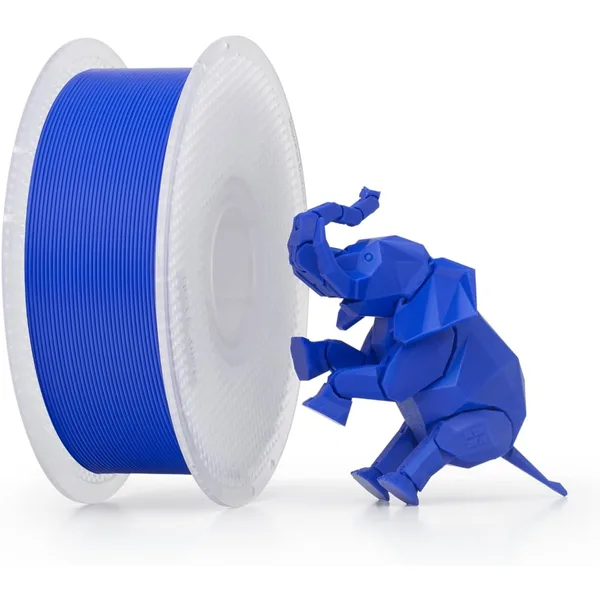
A 1kg spool of 3D printer filament costs between $15 and $40 in 2026 for PLA — and the price gap between the cheap stuff and the premium stuff is smaller than most first-time buyers expect. This guide breaks down what you should actually pay for filament by brand, material, and quality tier, plus the single metric you should use when comparing spools.
TL;DR — the price map
| Tier | Price range (1kg PLA) | Who it’s for | Example brands |
|---|---|---|---|
| Budget | $15–$19 | Hobbyists, prototyping, kids | Sunlu, Overture, Elegoo, Inland |
| Mid | $19–$25 | Most users, sellers, consistent quality | Bambu Lab, Hatchbox, PolyMaker PolyLite, Creality Hyper |
| Premium | $29–$40 | Tight tolerances, commercial, specialty | Prusament, PolyMaker PolyMax, MatterHackers Pro |
Specialty materials add a premium on top:
- PETG: +$2–$5 per kg over PLA
- ABS / ASA: +$3–$6 per kg over PLA
- TPU (flexible): $25–$40 per kg
- Nylon: $30–$50 per kg
- Carbon fiber PLA/PETG: $35–$55 per kg
- Standard resin (for SLA/MSLA printers): $20–$35 per kg
- ABS-like / tough resin: $25–$50 per kg
Cost per gram is the only metric that matters
Two spools can look similarly priced and be wildly different values. Here’s a real comparison using numbers from our filament database:
- Sunlu PLA+: $14.99 / 1000g = $0.015 per gram
- Bambu Lab PLA Basic: $19.99 / 1000g = $0.020 per gram
- Prusament ASA: $34.99 / 850g = $0.041 per gram
Notice Prusament ASA is on an 850-gram spool, not 1000g. Some manufacturers sell sub-kilogram spools at prices that look like 1kg prices on the shelf. Always divide, never eyeball.
The cost-per-gram lens also resolves the “is premium worth it?” debate. A premium Prusament spool at $29.99 costs $0.030/g — exactly $0.015/g more than budget Sunlu. For an average 40-gram print, that’s a 60-cent difference. If one in ten prints on the budget spool fails and wastes 20 grams, you’ve already burned $0.30 on failed budget filament — meaning the premium stuff costs you roughly $0.30 extra per print after accounting for failures. Most hobbyists would rather save the $0.30 than chase tighter tolerances.
Price by brand tier
Budget PLA: $15–$19 per kg
Sunlu PLA+ ($14.99 from Amazon) is the reliable budget champion. It’s printed by millions of hobbyists, has a wide color selection, and dries well if you live somewhere humid. Sunlu runs frequent 5-for-4 bundle deals on Amazon that drop the effective per-spool price to ~$12.
Overture PLA ($18.99) is a slight step up in diameter consistency — Overture advertises ±0.03mm tolerance, which matters for fine detail prints. Overture’s matte PLA is also excellent for a budget brand and prints much cleaner than you’d expect.
Elegoo PLA ($15.99) exists mostly to pair with Elegoo printers but works fine on any machine. Limited color selection compared to Sunlu and Overture.
MatterHackers Build Series ($19.99) is MatterHackers’ house brand — bulk-friendly, good customer service if a spool has issues, but shipping costs add up if you’re not combining orders.
Inland (Micro Center) is the secret weapon if you have a Micro Center nearby. $15 for 1kg in person, no shipping, and consistent quality. The downside is you need to physically go to the store.
Mid-tier PLA: $19–$25 per kg
Bambu Lab PLA Basic ($19.99) is the default for anyone printing on a Bambu machine. The AMS RFID auto-recognition is a genuine convenience, and the Bambu color range is beautiful. Note: you don’t need Bambu filament to use Bambu printers — any 1.75mm PLA works fine — but the convenience factor is real.
Hatchbox PLA ($22.99) is the Amazon old guard. Consistent, reliable, huge color range. Slightly more expensive than Bambu but has been the bedrock reliable pick for years.
PolyMaker PolyLite PLA ($19.99) is arguably the sweet spot — budget price with near-premium consistency. PolyMaker is the most scientific of the filament companies; their spec sheets are detailed and their batch QC is strong.
Creality Hyper PLA ($18.99) is formulated specifically for high-speed printing (the Creality K-series’ marketing angle). Works fine on non-Creality printers too.
Premium PLA: $29–$40 per kg
Prusament PLA ($29.99) has the tightest diameter tolerances on the market — Prusa publishes batch-level QR codes that let you look up the exact diameter history of your specific spool. It’s overkill for most prints, but for fine-detail parts where a ±0.03mm diameter variance messes up your extrusion, it’s genuinely worth the extra few dollars per spool.
PolyMaker PolyMax PLA ($34.99 for 750g — so ~$46/kg equivalent) is engineering-grade PLA with 9× higher impact strength than standard PLA. Worth it for functional parts that need to survive drops; overkill for decorative prints.
MatterHackers Pro Series PLA ($36.99) competes with Prusament on consistency. Strong color range, excellent customer service.
Specialty materials — what you’ll actually pay
PETG: $17–$35 per kg
PETG is the most useful step-up from PLA — more durable, higher temperature tolerance, dishwasher-safe. Pricing roughly tracks PLA with a $2–$5 premium:
- Sunlu PETG: $16.99
- Overture PETG: $21.99
- Hatchbox PETG: $24.99
- Bambu Lab PETG HF (high-flow): $27.99
- Prusament PETG: $34.99
The Bambu Lab PETG HF variant is formulated for high-speed printing and is genuinely faster than generic PETG without sacrificing quality. Worth the extra few dollars if you’re printing PETG often.
ABS and ASA: $20–$35 per kg
ABS has largely fallen out of favor since PETG exists and prints easier. Where ABS still wins is automotive (heat resistance) and post-processing (you can acetone-smooth it to a glossy finish). ASA is essentially “UV-resistant ABS” — use it for anything that lives outside.
- eSUN ABS+: $24.99
- Prusament ASA: $34.99 (850g spool)
TPU (flexible): $25–$40 per kg
TPU prints slow and requires a direct-drive extruder (or a well-tuned Bowden with low retraction). eSUN eTPU-95A at $29.99 is the reliable starting point. Bambu Lab TPU is noticeably higher quality but costs $35+.
Resin: $20–$50 per kg
Standard resin for MSLA/LCD printers costs about the same as mid-tier PLA. The two reliable budget picks are Elegoo Standard Resin ($22.99) and Anycubic Standard Resin. “ABS-like” and “tough” resins cost $30–$50 per kg and are worth it for functional parts — plain resin is brittle.
Where to buy — honest comparison
Amazon is the default for budget brands. Prices are competitive, Prime shipping is fast, and returns are easy if a spool arrives damaged. The downside: third-party seller quality varies. Stick to the Amazon-shipped-and-sold listings.
Brand direct (bambulab.com, prusa3d.com, creality.com) is the best pick for premium spools. Prices are identical or slightly higher than Amazon, but you get guaranteed fresh stock, better warranty support, and sometimes bundle deals when buying a new printer.
MatterHackers is the pick for specialty filaments, engineering materials, and bulk orders. Their house brand (Build Series) is competitive with Sunlu on price, and their customer service is excellent if you have a problem. Worth signing up for their rewards program for the 3% cashback on every order.
Micro Center (in-store, US) is the cheapest option if you have one nearby — Inland filament is under $15/kg with no shipping.
Avoid: eBay, AliExpress, and random Shopify filament stores. The savings are usually ~$2/spool at the cost of unknown quality control, inconsistent diameter, and long shipping times.
How to know what your print actually costs
Once you know your cost per gram, multiplying by the grams used gives you the filament cost of any print. Or just drop the numbers into our Filament Cost Calculator — it handles the math, includes the brand presets above, and has a waste-factor slider for multi-color AMS prints.
Frequently asked questions
What’s the cheapest 3D printer filament that’s still good?
Sunlu PLA+ and Inland PLA (Micro Center) both come in under $16/kg and are reliable for everyday printing. Go any cheaper than that and you’re gambling on consistency.
Is expensive filament actually worth it?
Only for specific use cases. Premium filament is worth it when: (1) you need tight diameter tolerance for fine detail prints, (2) you’re printing functional parts that need to survive drops, or (3) you’re selling prints and need batch-level consistency. For decorative hobby prints, mid-tier filament is the sweet spot.
How many prints can I get from a 1kg spool?
Depends on print size. For small prints (10–30g each) like keychains and clips, a 1kg spool gives you 30–100 prints. For medium prints (50–150g each), expect 6–20 prints. Large functional parts (300g+) yield 2–3 prints per spool.
Does filament go bad?
PLA and PETG are fine for 1–2 years sealed. Once opened, humidity is the enemy — PLA absorbs moisture over weeks and starts printing rough. ABS is more forgiving. Nylon and TPU absorb water within days and need to be dried before every use. A cheap filament dryer ($40–$60) pays for itself quickly if you print nylon or live somewhere humid.